Cada uno de los puntos se explicará en más detalle cada semana. Por tanto, hoy tocaremos el punto número 7: “Se enfoca a los procesos internos.“.
Algunas veces, como ya hemos comentado en otros puntos, los problemas que marketing enfrenta no provienen desde el mercado y la competencia, sino desde nuestras mismas instalaciones.
En momentos como este es que el CMO debe definir, instrumentar y corregir los procesos internos para evaluar tanto interna como externamente los resultados obtenidos con las actividades desarrolladas.
Este es un punto muy importante y delicado, pues involucra un análisis interno del cómo y por qué de los resultados obtenidos y del potencial que tienen para llegar y cubrir a un mercado específico.
Al enfocarse a los procesos internos, el CMO debe analizar dos aspectos fundamentales: 1) los procesos, fases o actividades actuales para compartir información, atender clientes y desarrollar campañas; y 2) el nivel de conocimiento que se tiene dentro de la organización.
Identificar prioridades de marketing interno
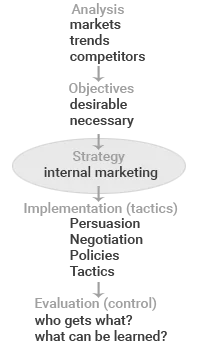
El siguiente gráfico permite conocer, a grandes rasgos, el proceso de marketing interno. Desde aquí se puede conocer en qué punto debe aplicarse mayor atención a los procesos, y sub-procesos, dentro de nuestro proceso global de marketing.
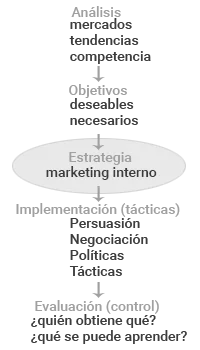
Por una parte, como ya hemos indicado en otros artículos, si nuestros procesos internos presentan cuellos de botella, se tornará más difícil el alcanzar los objetivos establecidos, mientras que el nivel de conocimiento de nuestro personal será un factor que motive su imaginación e innovación, un aspecto que puede ser una limitante o un catalizador para el crecimiento y desarrollo del desempeño, que se traduce como competitividad.
Es importante considerar que no se pide que se establezcan más procesos. Lo que debe hacerse es mejorarlos y, de ser posible, reducirlos para obtener mejores resultados y ser más eficientes. En caso contrario, se estaría creando un burocratismo interno que, a la larga, ofrecerá mayores problemas en el desempeño de la empresa como un todo. Este tema es algo que se comenta en el punto 6.
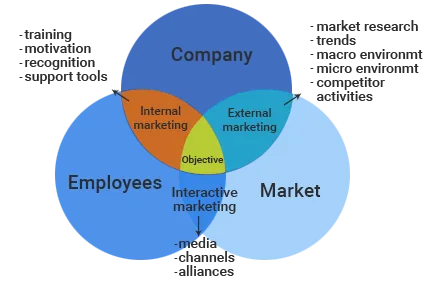
El gráfico siguiente trata de explicar y englobar los procesos y el tipo de marketing que debería aplicarse para tener mayores posibilidades de éxito.
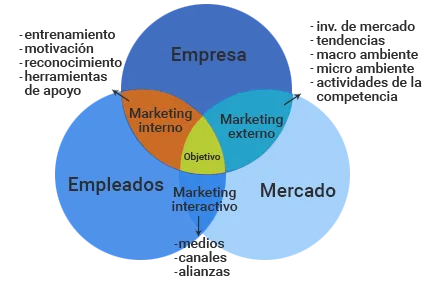
Como puede observarse, el marketing interno es aquél que se aplica directamente con los empleados. Es aquí donde el conocimiento de los mismos debe detectarse, reforzarse y desarrollarse.
Los ‘bandos’ internos
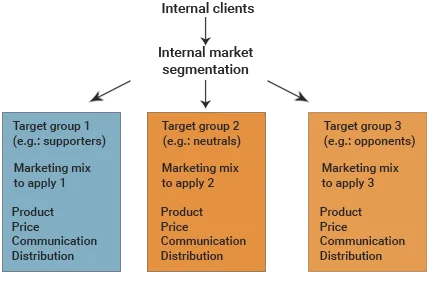
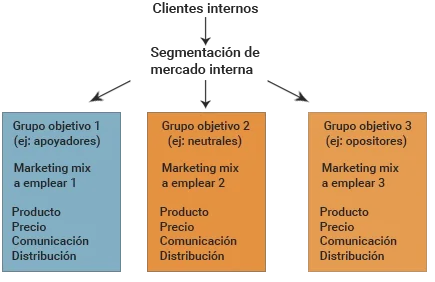
Pero no todo debe enfocarse a entrenarlos, reconocer su esfuerzo, motivarlos y entregarles herramientas para apoyarlos. Puesto que toda campaña contará con ejecutivos ofreciendo su apoyo, siendo neutrales o estando en contra de la misma, aquí se presenta otro tipo de marketing interno, pues se deberán enfocar mayores esfuerzos con los ejecutivos que se considera serán los “opositores” de la campaña, proyecto u objetivo.
Con esta segmentación de tres “mercados internos”, sólo requerimos definir quiénes pertenecen a uno y quiénes a los otros. Una vez identificados se procede a preparar un “plan de marketing” para obtener el apoyo de todos. Por ejemplo, para el segmento de los “opositores”, se pueden dedicar más horas para realizar presentaciones, reuniones y entrevistas uno a uno para exponer los puntos importantes.
Realizar esta segmentación interna es importante y la diferencia entre unas y otras empresas radica en la tecnología y el mando (jefes) que se tiene, pues en este caso la práctica (experiencia) aventaja enormidades a la teoría.
El siguiente gráfico nos permite tener una mejor visión de esta segmentación interna.
La nuevas tendencias
KPIs, ¿te suenan?
Los KPIs fueron la brújula de esa época dorada en que la automatización inició en el marketing. Hoy en 2026 esa brújula ya no es suficiente. La inteligencia artificial transformó la medición en un sistema vivo que no se limita a observar el pasado sino que anticipa el futuro.
El CMO moderno no se conforma con revisar estadísticas históricas. Utiliza modelos predictivos que convierten métricas en señales de tendencia. El Scorecard dejó de ser un cuadro estático y se volvió un tablero dinámico que aprende, se ajusta y corrige el rumbo en tiempo real.
Al enfocarnos en procesos internos ya no hablamos únicamente de medir áreas tradicionales como estadísticas clave, productos, interacción digital y offline, medios de referencia, canales o call centers. Ahora hablamos de sistemas que integran inteligencia artificial capaces de detectar patrones ocultos en la interacción de clientes, anticipar ROI y riesgos antes de lanzar campañas, recomendar ajustes automáticos en canales y ofertas y convertir datos dispersos en insights accionables.
El gran reto no es diseñar el cuadro de mando sino sostener un ecosistema de métricas inteligentes que se mantenga vigente y competitivo. Las empresas que abandonan rápido la implementación se quedan atrapadas en la grilla interna. Las que perseveran convierten la medición en ventaja estratégica.